
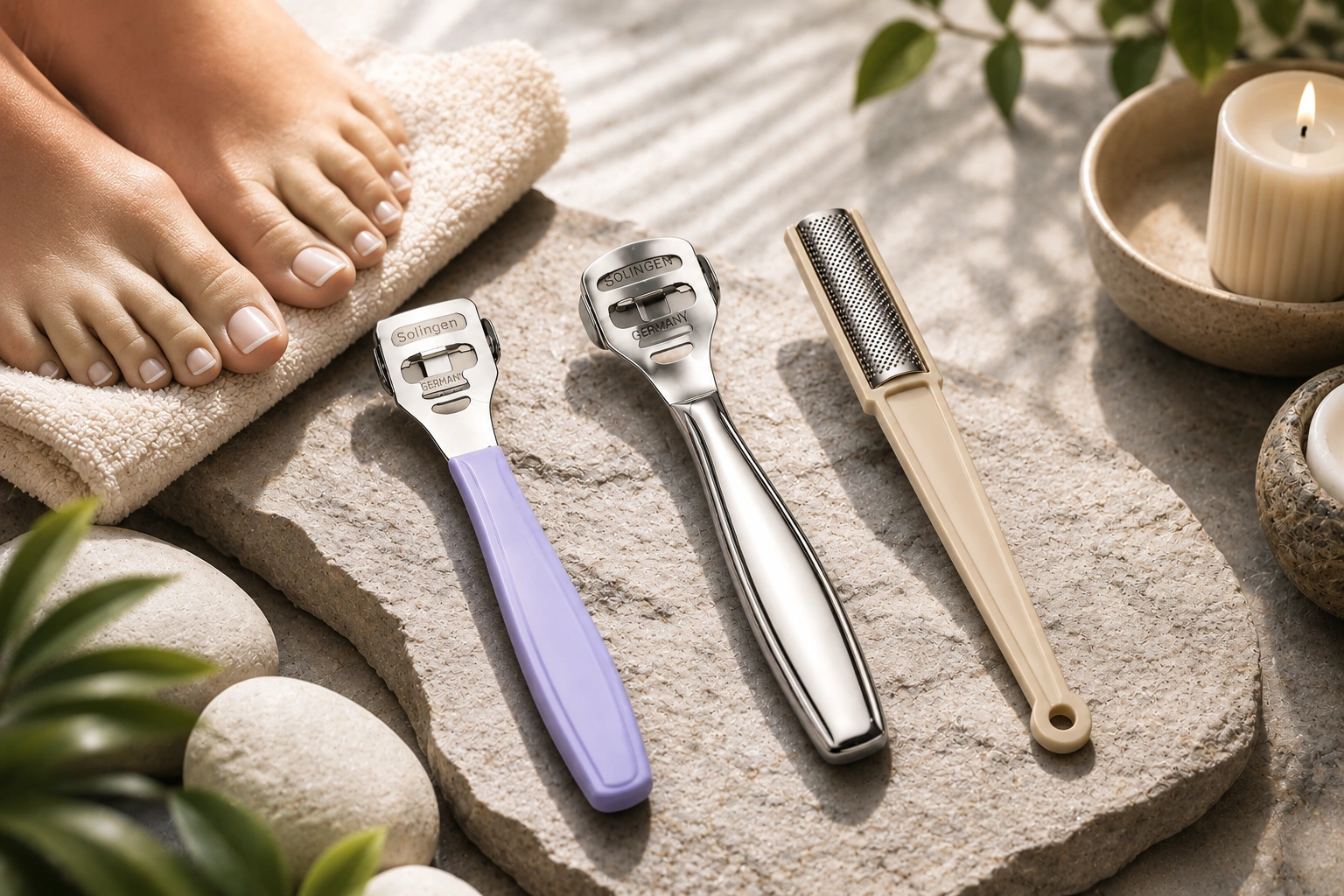
Callus care is an essential part of healthy foot maintenance, yet it’s often approached too aggressively. While a callus tool can effectively remove hardened skin, improper use can lead to irritation, cuts, or even infection. Many of the problems people experience don’t come from the tool itself—but from how it’s used.
Understanding callus removal mistakes is the first step toward safer, more effective results. With the right technique and quality foot care tools, callus removal can be gentle, controlled, and beneficial rather than damaging.
Why Callus Removal Requires a Careful Approach
Calluses form as a natural response to pressure and friction. They protect underlying skin, but excessive buildup can cause discomfort, cracking, and uneven pressure distribution while walking.
The goal of safe callus removal is not to eliminate calluses entirely, but to reduce excess thickness gradually. Removing too much skin at once disrupts the skin barrier and increases sensitivity—often making the problem worse over time.
Mistake 1: Removing Too Much Skin at Once
One of the most common callus removal mistakes is trying to achieve instant smoothness. Over-filing or over-cutting strips away protective layers, leaving skin tender and prone to injury.
Callus tools work best when used in small, controlled steps. Gradual removal allows the skin to adjust naturally and reduces the risk of soreness or inflammation.
Mistake 2: Using a Callus Tool on Dry, Hard Skin
Dry calluses are rigid and resistant, making them harder—and riskier—to remove. Using a callus tool on unsoftened skin increases the chance of uneven cuts or slipping.
For safe callus removal, feet should be soaked in warm water for several minutes before treatment. Softened skin responds better to gentle pressure and allows smoother, more predictable results.
Mistake 3: Applying Excessive Pressure
Callus tools are designed to work with light pressure. Forcing the tool into the skin doesn’t improve effectiveness—it increases the risk of cuts.
Excess pressure also reduces control, especially on curved areas of the foot. A steady hand and minimal force allow the tool to glide over hardened skin without digging into healthy tissue.
Mistake 4: Using Dull or Low-Quality Foot Care Tools
A worn or poorly made callus tool requires more force and offers less control. This is one of the most overlooked callus removal mistakes.
High-quality foot care tools are engineered to cut evenly and predictably. Sharp, well-aligned blades reduce the need for pressure and improve overall safety. Inferior tools often cause tearing rather than clean removal, leading to irritation.
Mistake 5: Ignoring Hygiene and Blade Condition
Callus tools come into direct contact with skin, making hygiene critical. Failing to clean the tool after use—or continuing to use worn blades—increases the risk of bacterial buildup.
Blades should be cleaned thoroughly and replaced when they show signs of wear. Using fresh, clean blades ensures smoother removal and protects skin health.
Mistake 6: Skipping Aftercare
Removing calluses is only part of foot care. Skipping aftercare leaves skin vulnerable to dryness and cracking.
After using a callus tool, moisturizing is essential. A nourishing foot cream helps restore the skin barrier and keeps newly treated areas supple. Consistent aftercare also slows the return of excessive callus buildup.
Choosing the Right Tool Makes a Difference
Technique matters—but so does the tool itself. A well-designed callus tool supports safe callus removal by offering control, balance, and clean cutting action.
A strong example is the Hans Kniebes Stainless Steel Callus Plane with 10 Replacement Blades.
Crafted from corrosion-resistant stainless steel, this tool is designed for controlled, hygienic use. The replaceable blade system ensures consistent sharpness, while the stable grip allows precise handling without excessive pressure. It’s built for gradual, effective callus care—not rushed results.
This approach reflects the Hans Kniebes philosophy: foot care tools should protect the skin as much as they refine it.
How to Practice Safe Callus Removal at Home
Safe callus care doesn’t require force—only consistency. Softening the skin, using light strokes, maintaining clean blades, and moisturizing afterward form the foundation of responsible foot care.
Used correctly, a callus tool helps maintain comfort, improves skin texture, and prevents painful buildup without compromising skin integrity.
Final Perspective
A callus tool is a powerful aid in foot care, but only when used with care and restraint. Avoiding common callus removal mistakes protects your skin, improves results, and makes foot care a comfortable routine rather than a risky task.
With the right technique and thoughtfully crafted foot care tools from Hans Kniebes, callus removal becomes controlled, hygienic, and effective—supporting healthier feet over the long term.
Gentle care always outperforms aggressive shortcuts, especially when it comes to your feet.
FAQs
1. What is the most common mistake when using a callus tool?
The most common callus removal mistake is removing too much skin at once. This can cause irritation, sensitivity, and even injury. Callus removal should always be gradual.
2. Is it safe to use a callus tool at home?
Yes, safe callus removal is possible at home when the skin is softened beforehand, light pressure is used, and the tool is clean and well-maintained.
3. How often should I use a callus tool?
A callus tool should be used only when needed, typically once every few weeks. Overuse can weaken the skin barrier and increase callus formation.
4. Can using the wrong callus tool damage my feet?
Yes. Low-quality or dull foot care tools require more force and offer less control, increasing the risk of cuts, uneven skin removal, and discomfort.
5. What should I do after removing calluses?
After using a callus tool, apply a moisturizing foot cream to restore hydration and protect the skin. Proper aftercare helps maintain smooth results and prevents cracking.
Related products
