A wallet is handled daily, opened repeatedly, and relied upon without hesitation. Yet when selecting one, attention is often drawn first to exterior leather, color, or silhouette. At Hans Kniebes, we approach wallet construction differently. True quality in men’s wallet design is defined not by surface appearance but by the precision of its wallet interior layout.
Exterior style may attract attention. Interior structure determines long-term usability.
The Hidden Engineering of a Wallet Interior Layout
A wallet functions as a compact organizational system. Cards, currency, identification, and receipts must be stored securely while remaining easily accessible. The functional wallet layout governs how efficiently these elements coexist.
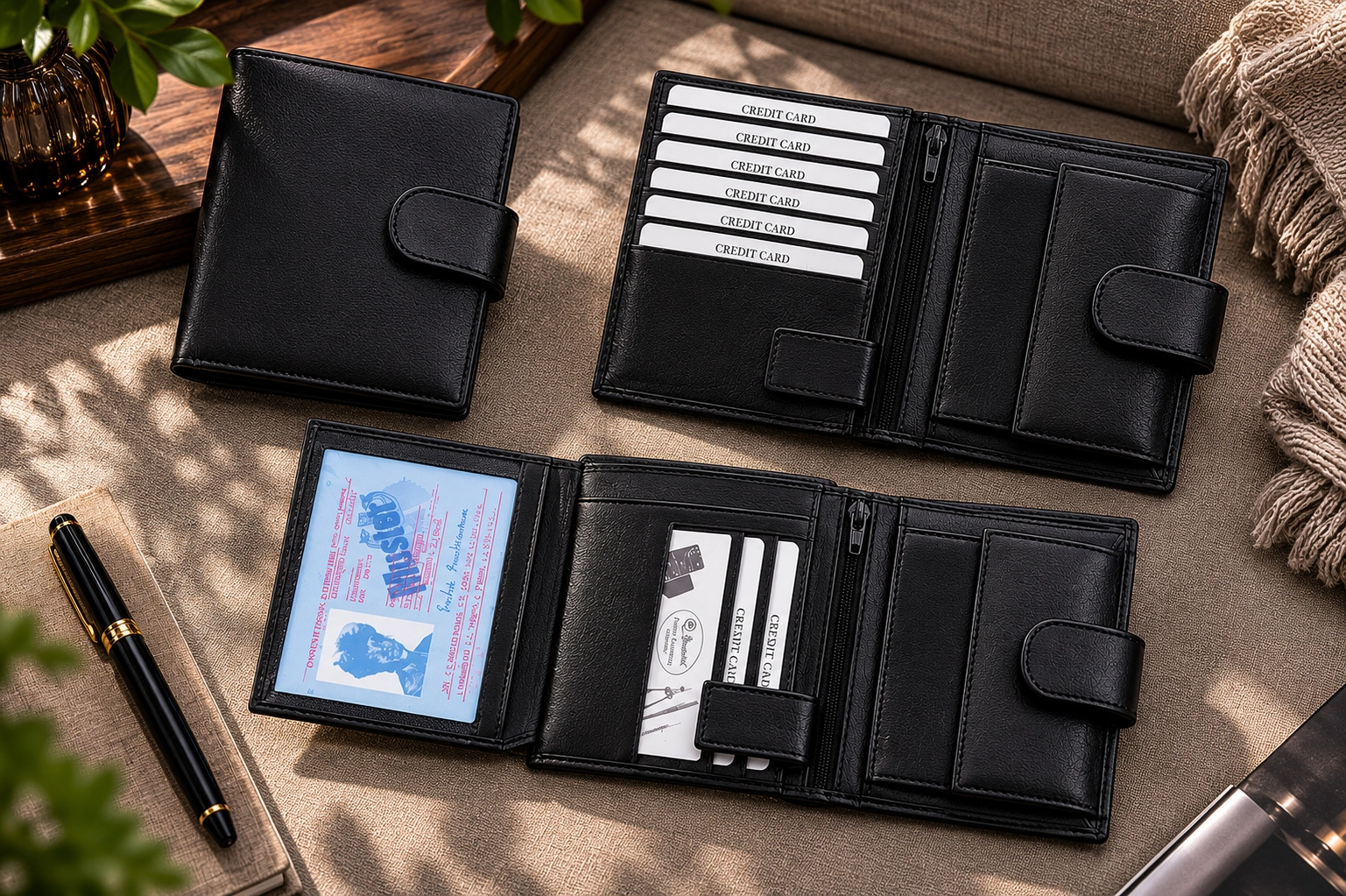
An intelligently structured card organization wallet balances capacity with clarity. Slots must be precisely spaced to prevent overstretching. Compartments must allow smooth insertion and removal without compromising leather integrity.
In German-made leather goods, interior proportions are calculated to preserve form even under regular use. Solingen craftsmanship principles emphasize durability and ergonomic access, ensuring that practical wallet features are integrated without unnecessary bulk.
A poorly planned interior results in crowding, uneven pressure points, and distorted leather over time. Structural precision prevents this.
Why Men’s Wallet Design Begins Inside
In premium men’s wallet design, interior architecture is developed before exterior detailing. The number of card slots, orientation of bill compartments, and placement of hidden pockets define daily usability.
Consider the difference between aesthetic minimalism and functional minimalism. A visually slim wallet may appear elegant, but without a well-balanced wallet interior layout, it quickly becomes overloaded.
Professional leather artisans evaluate:
Card slot depth and alignment
Reinforcement stitching at stress points
Fold distribution to prevent spine fatigue
Layer thickness to maintain profile integrity
These technical elements shape the performance of a functional wallet layout far more than decorative stitching ever could.
Card Organization Wallets and Everyday Efficiency
Modern life demands structured organization. Bank cards, business cards, identification, and transit passes require dedicated space. A well-designed card organization wallet ensures each item has a defined position, reducing friction during daily transactions.
When slots are unevenly cut or too tight, leather stretches prematurely. When spacing is excessive, the wallet loses compactness. Balance is essential.
In German leather craftsmanship, especially within brands committed to Made in Germany production standards, tolerances are precise. The objective is longevity — a wallet that maintains its form and functionality for years.
This philosophy guides the development of practical wallet features such as reinforced card sleeves, structured bill compartments, and secure interior stitching.
The Relationship Between Leather Quality and Interior Structure
High-quality leather alone does not guarantee performance. Without thoughtful interior planning, even premium materials fail to deliver comfort.
At Hans Kniebes, interior design and material selection are aligned from the beginning. Soft yet resilient leather supports structural compartments without collapsing. Reinforced stitching maintains card slot definition.
An example can be seen in our premium leather wallet collection, designed with carefully proportioned card slots and a structured bill section, our wallets combine refined exterior aesthetics with a highly functional wallet layout engineered for everyday efficiency. The interior architecture preserves shape while supporting organized storage, reflecting German precision in leather goods manufacturing.
Here, style is supported by structure — never the other way around.
Practical Wallet Features Define Long-Term Value
A wallet’s lifespan depends on internal durability. Daily opening and closing places stress on fold lines and card compartments. Without reinforced construction, the leather weakens.
Practical wallet features such as:
Edge-coated slot openings
Evenly distributed stitch tension
Structured lining support
Precisely aligned seams
prevent deformation and preserve ergonomic handling.
In premium men’s accessories, interior engineering distinguishes a temporary accessory from a lasting essential.
German Craftsmanship and Functional Design Philosophy
Solingen craftsmanship has long emphasized the union of form and function. While Hans Kniebes is widely recognized for precision grooming tools, the same engineering mindset defines our leather goods.
A wallet must perform seamlessly in daily life. Its value lies in usability, durability, and structural harmony. Exterior style enhances presence, but interior precision ensures satisfaction.
A refined wallet interior layout supports organized living. A disciplined men’s wallet design protects materials from strain. A truly functional wallet layout adapts to modern demands without sacrificing compact elegance.
In the end, a wallet is opened far more often than it is displayed. When the interior is engineered with intention, every interaction reflects thoughtful design.
FAQs
1. What is the most practical wallet interior layout?
The most practical wallet interior layout includes evenly spaced card slots, a structured bill compartment, and reinforced stitching to maintain shape and durability.
2. How many card slots should a men’s wallet have?
A well-balanced men’s wallet design typically offers 6–8 card slots to ensure organized storage without overloading or stretching the leather.
3. Why is interior layout more important than wallet style?
Interior structure affects daily usability, card organization, and long-term durability, while exterior style mainly influences appearance.
4. What makes a wallet functional for everyday use?
A functional wallet layout combines smart card organization, accessible compartments, compact dimensions, and high-quality leather construction.
5. Do German-made wallets last longer?
German-made wallets, especially those crafted with precision stitching and structured interior design, are known for durability and long-term performance.
Related products