
Precision grooming tools are engineered to last. Stainless steel manicure instruments, precision nail scissors, and cuticle tools are manufactured to maintain alignment, sharpness, and structural integrity over years of use. Yet even long-lasting grooming tools can deteriorate prematurely — not because of manufacturing flaws, but because of improper grooming tool storage.
At Hans Kniebes, we frequently observe that the most common cause of early wear is not usage, but environment. Tool storage mistakes quietly undermine the durability of even German-made precision instruments shaped by Solingen craftsmanship.
How Tool Storage Mistakes Compromise Precision
Grooming tools are mechanical instruments. Their performance depends on blade alignment, pivot tension, and corrosion resistance. When stored carelessly, these elements are exposed to unnecessary stress.
Common tool storage mistakes include:
Leaving tools in humid bathrooms
Allowing metal instruments to contact each other loosely
Storing scissors partially open
Failing to dry instruments completely after cleaning
Humidity accelerates oxidation, even in high-grade stainless steel. Friction between tools dulls cutting edges. Misaligned storage can place pressure on pivot joints, gradually altering blade geometry.
Over time, these small oversights reduce cutting precision and compromise tool maintenance standards.
Why Protect Grooming Tools from Moisture and Friction
To protect grooming tools, moisture control is essential. Water trapped in joints or along blade edges can slowly affect finish quality. Even stainless steel manicure tools benefit from dry, ventilated storage.
Equally important is separation. When scissors, nail clippers, and cuticle nippers are stored without organization, metal-on-metal contact can damage sharpened edges. Precision grooming instruments rely on micro-level blade refinement; minor abrasions reduce efficiency.
Professional nail care tools are designed with longevity in mind. Their environment should reflect the same discipline.
The Role of Structured Storage in Tool Maintenance
Effective tool maintenance tips begin with thoughtful storage. After cleaning and drying, tools should be placed in a protective case that stabilizes position and minimizes movement.
Structured compartments prevent contact between blades. Secure closures protect instruments from dust and environmental exposure. High-quality leather cases offer an additional layer of insulation from humidity fluctuations.
In professional grooming environments, organized storage is considered part of routine maintenance — not an afterthought.
Why High-Quality Tools Still Require Protection
A common misconception is that premium tools require less care. In reality, the finer the instrument, the more critical its protection.
Precision nail scissors, cuticle scissors, and stainless steel manicure tools manufactured under German engineering standards are designed for accuracy. Their cutting edges are finely honed. Their pivot systems are carefully calibrated.
Improper grooming tool storage gradually disrupts this balance.
Long-lasting grooming tools remain durable only when supported by consistent care. Protecting them from environmental stress preserves both functionality and aesthetic finish.
A Structured Solution for Grooming Tool Storage
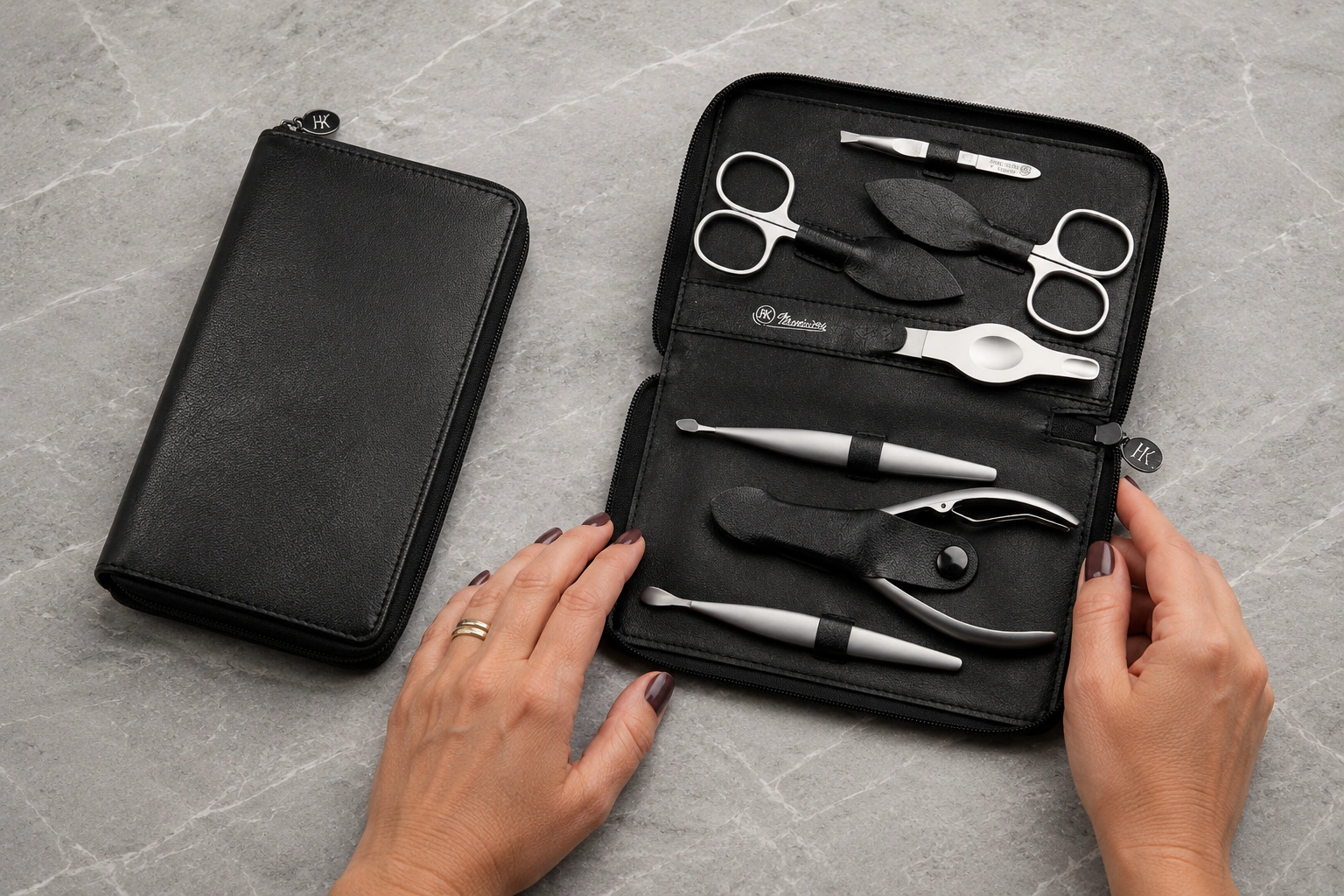
At Hans Kniebes, we design not only precision instruments but also storage solutions that reflect the same craftsmanship philosophy. Our Amalfi Full-Grain Leather Manicure Case, 7-Piece – crafted from full-grain leather with individually secured compartments, this structured case stabilizes each stainless steel instrument and minimizes friction between tools. The enclosed design protects grooming tools from humidity exposure while supporting organized, professional storage standards.
Here, protection becomes an extension of precision.
Building Habits That Preserve Long-Lasting Grooming Tools
To maintain professional grooming instruments effectively:
Always dry tools completely before storage
Store them in structured compartments
Avoid prolonged humidity exposure
Keep blades closed and aligned
These simple yet consistent tool maintenance tips extend the lifespan of precision instruments significantly.
German-made grooming tools represent engineering investment. Solingen craftsmanship ensures mechanical reliability. Yet performance longevity depends equally on responsible grooming tool storage.
Final Thoughts
Even the most refined stainless steel scissors or cuticle tools cannot resist continuous environmental stress. Tool storage mistakes may not cause immediate failure, but their cumulative effect erodes precision.
At Hans Kniebes, we believe that protecting grooming tools is part of respecting craftsmanship. Structured storage, controlled humidity, and disciplined maintenance practices preserve alignment, sharpness, and structural integrity.
High-quality tools are built to last. Proper storage ensures they truly do.
FAQs
1. How should grooming tools be stored properly?
Grooming tools should be cleaned, fully dried, and stored in a structured case to prevent moisture exposure and blade contact.
2. Can humidity damage stainless steel manicure tools?
Yes, prolonged humidity can affect even high-quality stainless steel, leading to corrosion at joints and reduced cutting precision.
3. Why do grooming tools lose sharpness over time?
Improper grooming tool storage, metal contact, and lack of drying are common tool storage mistakes that gradually dull edges.
4. What is the best way to protect grooming tools?
To protect grooming tools, store them in individual compartments, avoid moisture, and follow consistent tool maintenance tips.
5. Do high-quality grooming tools require special care?
Yes, long-lasting grooming tools maintain their precision only when stored correctly and protected from environmental stress.
Related products
